
When Does a Pool Actually Need an Acid Wash?
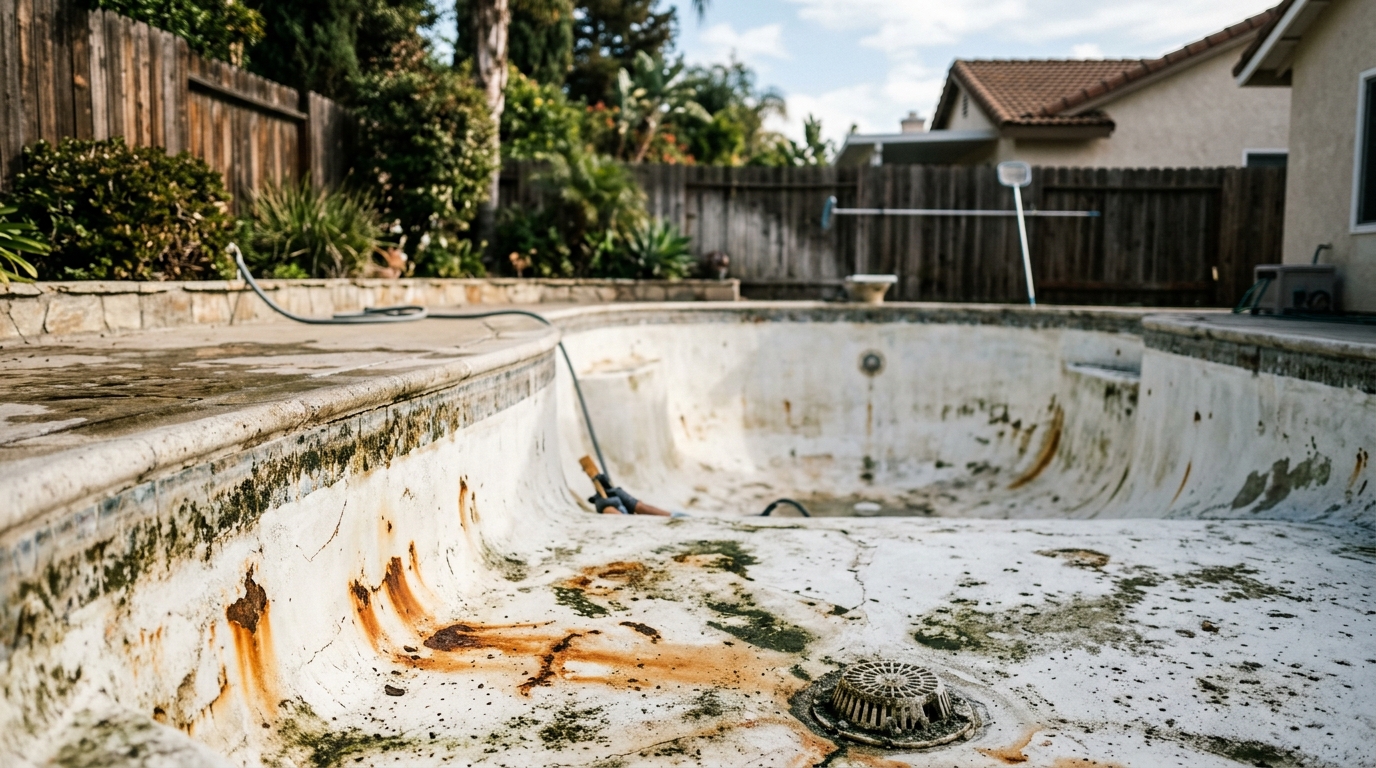
Most Jacksonville pool owners don't think about acid washing until something forces the question. Maybe the water finally cleared after a rough summer, but the walls still look dingy. Maybe the pool sat unused for months and came back green. Maybe a neighbor mentioned it, and now you're wondering whether you actually need one or just a good cleaning.
The answer depends on what's going on with your plaster, not just your water chemistry. Here's how to tell if an acid wash is the right choice for your pool, and what the process actually involves if you do need one.
What Acid Washing Actually Does
An acid wash removes a thin layer of plaster from the surface of your pool. The acid reacts with calcium deposits, organic staining, and bacteria that have worked their way into the material itself. What's left is fresh plaster underneath, which is why a pool often looks noticeably brighter after a wash than it did before the staining even started.
This is different from a shock treatment or a clarifier. Those work on the water. An acid wash works on the surface. If the problem is in the plaster rather than the chemistry, adding more chemicals to the water won't fix it. You'll keep treating the symptom while the staining stays put.
Because the process removes material, it also shortens the life of your plaster slightly each time it's done. A properly maintained pool shouldn't need one every season. Once every five to seven years is more typical, though neglected pools or those with heavy calcium buildup may need it sooner.
Signs Your Pool Needs an Acid Wash, Not Just a Cleaning
The clearest sign is staining that won't respond to treatment. You can balance your water, shock the pool, brush the walls, and still see brown, grey, or rust-colored marks on the plaster. That usually means the discoloration has bonded to the surface rather than floating in the water column where chemicals can reach it.
A pool that's been closed for a full season often falls into this category. Water left sitting without circulation breeds algae and bacteria that root into plaster over time. When you drain it and look at the shell, the surface may be stained well beyond what standard pool cleaning services can address.
Heavy calcium scaling is another trigger. In North Florida, hard water and high temperatures push calcium out of solution and onto pool surfaces. Once it builds up thickly enough, brushing and descalers don't cut through it. An acid wash will.
If your pool has turned green from prolonged neglect, that's also a strong indicator. Green water can often be treated chemically, but if algae has had weeks or months to establish itself in the plaster, the surface itself needs to be addressed. Our post on why Jacksonville pools turn green goes deeper into what causes that, and when it crosses into surface-level territory.
What to Expect from the Process
The pool has to be drained first. That's non-negotiable, because the acid is applied directly to the shell with the water out. Once drained, the technician mixes a diluted acid solution and works it across the surface in sections, neutralizing it as they go to stop the reaction before it removes more plaster than intended.
Draining also gives you a clear view of the shell's condition. Cracks, surface wear, and delamination are easy to miss when a pool is full. An acid wash appointment is a reasonable time to assess whether anything else needs attention, which is why we include that kind of check as part of our pool repair services in Jacksonville.
After the wash, the pool is rinsed thoroughly and refilled. Chemistry takes a little time to stabilize after a refill, so plan on a day or two before the water is swim-ready. The whole process typically takes a day for a standard residential pool, depending on its size and the extent of the staining.
When a Standard Cleaning Is Enough
Not every staining issue requires an acid wash. Light discoloration from iron or copper, algae caught early, or tannin staining from leaves can often be addressed with the right chemistry and brushing without draining the pool at all. If you're not sure where your situation falls, it's worth getting a professional assessment before committing to a full drain.
For context on what a routine cleaning service covers versus a specialized treatment like acid washing, our pool service pricing guide breaks down what each type of service typically involves. Regular weekly maintenance through a plan like SparklingJomo keeps water chemistry in check and catches surface issues early, which often prevents the kind of buildup that leads to an acid wash in the first place.
If your pool came out of summer with staining that won't clear, or you're reopening a pool that's been sitting for a while, reach out to our team and we'll take a look before recommending next steps. Sometimes it's simpler than you think. Sometimes the surface needs real attention. Either way, you'll know what you're dealing with before any work starts.